Cherokee County Jury Convicts Woodstock Man of Murder, Sentences Him to Life Without Parole Plus 100 Years
Woodstock Community News Staff··4 min read
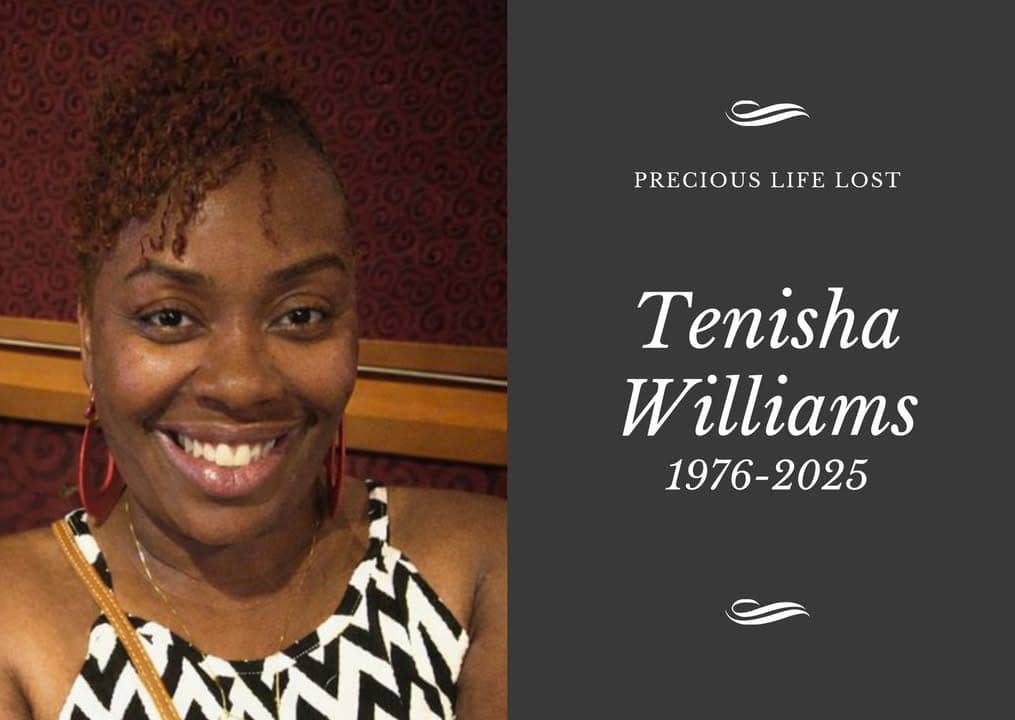
Kelvin Demond Williams was found guilty on all 13 counts after less than an hour of jury deliberation in the July 2025 fatal shooting of Tenisha Williams on Daventry Crossing
A Cherokee County jury convicted a Woodstock man of murder, attempted murder, and 11 additional charges on March 26 following a three-and-a-half-day trial, and a Superior Court judge immediately sentenced him to life in prison without parole plus 100 years and 12 months. Kelvin Demond Williams, 48, was found guilty on all 13 counts in his indictment for the fatal shooting of his wife, Tenisha Williams, 48, at the couple's home on Daventry Crossing in the Woodstock area of Cherokee County.
The charges stem from the events of July 13, 2025, when a 16-year-old boy called 911 at approximately 10:40 p.m. to report that his stepfather had shot at him and then shot his mother. The teenager was hiding in his bedroom when he made the call, telling the dispatcher that Williams had fired at him and was possibly reloading a revolver. A four-year-old boy was asleep in another bedroom at the time.
When Cherokee County Sheriff's Office deputies arrived, Williams was standing at the doorway to the open garage, smoking a cigarette. He was detained after repeated commands to exit the home. Deputies found Tenisha Williams deceased on the kitchen floor, and the firearm used in the murder was recovered on the kitchen island. Both children were safely removed from the home.
Security camera footage from inside the home captured the full sequence of events and was among approximately 150 exhibits introduced by the State at trial. The video showed Williams firing five shots: the first aimed at the teenager's head, which missed; two shots at Tenisha, both of which also missed; a fourth shot at the boy as he ran to his room, which missed as well; and a final, fatal shot fired at Tenisha after Williams walked toward her as she was cornered in the kitchen. The camera's audio captured Tenisha begging Williams not to shoot. After the shooting, Williams can be heard saying, "You dead, [expletive]?"
The jury deliberated for less than an hour before returning guilty verdicts on all 13 counts. Those counts included malice murder, two counts of felony murder, two counts of family violence aggravated assault, criminal attempt to commit murder, cruelty to children in the first degree, two counts of possession of a firearm during the commission of a felony, reckless conduct, and three counts of possession of a firearm by a convicted felon.
Superior Court Judge Shannon Wallace, who presides in the Blue Ridge Judicial Circuit, then imposed the maximum sentence, stating that the damage Williams caused is "unfathomable." She also ordered Williams to have no contact with any of Tenisha Williams' children, the children's foster mother, or their families.
Deputy Chief Assistant District Attorney Rachel Ashe, who prosecuted the case through the Office of the District Attorney's Domestic Violence Unit, described a pattern of abuse that extended well beyond the night of the murder. "Over the course of years, the defendant systematically isolated his wife and controlled her movements, even requiring her to wear a Bluetooth device so he could monitor her when she left the home," Ashe said. Evidence presented at trial showed that on the day of the murder, Williams had Tenisha purchase and load the very firearm he would use to kill her. "To this day, the defendant has shown no remorse, only indifference and cruelty," Ashe said.
The full weight of that cruelty came through in the sentencing hearing, where four individuals delivered victim impact statements. Family members described years of abuse, control, and intimidation so severe that Tenisha Williams was not permitted to contact her adult children or attend her own mother's funeral. The children's foster mother, described as a close friend from church, spoke of her love for the children and her commitment to care for them.
In all, 13 witnesses testified during the trial, including law enforcement officers, medical experts, and lay witnesses. The State introduced roughly 150 exhibits, among them the 911 call recording, in-home security camera video, crime scene photographs, body camera footage, medical reports, and recordings of jail phone calls — a body of evidence that painted an unambiguous picture of premeditated domestic violence.
District Attorney Susan K. Treadaway, whose office covers the Blue Ridge Judicial Circuit encompassing Cherokee County, credited the jury with handling extraordinarily difficult evidence with uncommon resolve. "This sentence sends a clear message that Tenisha's life mattered, and that the violence inflicted upon her was evil and inexcusable," Treadaway said. "We are deeply grateful to the jury, who were asked to watch and hear things no one should ever have to experience. They did so with care, courage, and a commitment to justice. Our hearts go out to the innocent children who will be forever affected by this senseless, brutal murder."
The case was investigated by the Cherokee County Sheriff's Office and prosecuted by Ashe with the assistance of Deputy Chief Assistant District Attorney Geoffrey Fogus. For Cherokee County residents, the verdict is a reminder that domestic violence can unfold quietly behind closed doors in any neighborhood — and that the community's law enforcement and judicial institutions stand ready to pursue the full measure of justice when it does. Anyone experiencing domestic violence in Cherokee County can contact the Cherokee Family Violence Center, which serves residents throughout the county, for confidential support and resources.
More Stories

Woodstock Police Bring Easter Magic to Front Yards With 'You've Been Egged' Tradition
The department's 'You've Been Egged' program sends officers to secretly fill yards with Easter eggs overnight
Woodstock Community News Staff·

Seven Cherokee County Students Earn Spots in Competitive Atlanta High School Art Exhibition
Artists from Cherokee, Creekview, Etowah, and Sequoyah high schools will display work at the competitive statewide juried show April 10-12 in Piedmont Park
Woodstock Community News Staff·
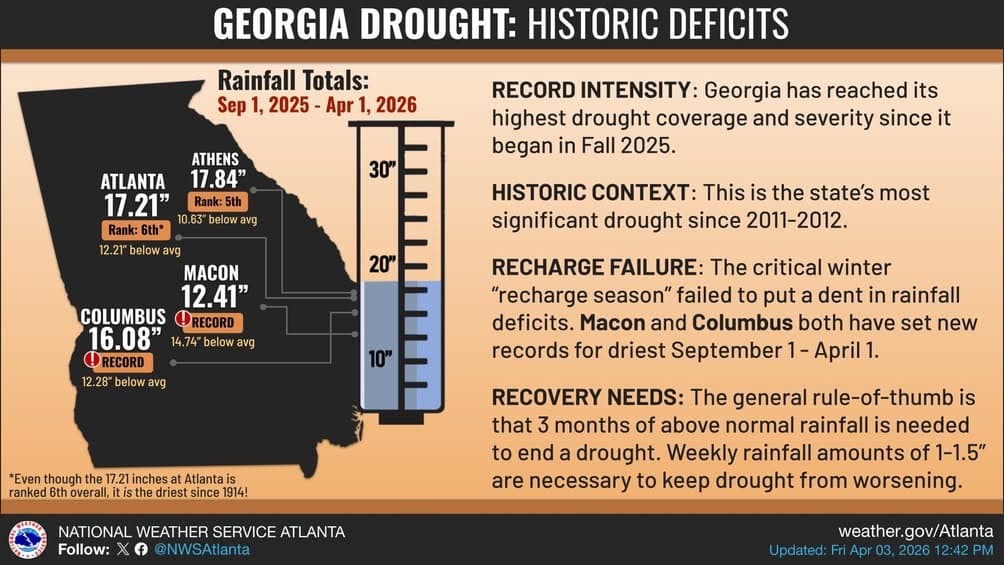
Woodstock Fire Department Warns of Wildfire Risk as Georgia Drought Hits Worst Levels in Over a Decade
Rainfall totals from September 2025 through April 2026 are the lowest in over a century at Atlanta, with no significant relief expected as warmer months arrive
Woodstock Community News Staff·

Free and Open to All: CCSD Festival of the Arts Takes Over Downtown Woodstock April 17-19
Free three-day event spreads student artwork and live performances across multiple downtown venues
Woodstock Community News Staff·